Sony’s PS5 Plan: Where BeastLink and Saros Push the AI Debate Next
Sony’s PS5 roadmap, from BeastLink to Saros, reveals how the company is pairing its upcoming game slate with a more pragmatic AI strategy.

Sony has been circling the same question from two different angles in recent days: what will the PlayStation lineup of the next few years look like, and where exactly will AI fit into it? On one side are newly announced games and studio plans; on the other is the company’s approach to generative AI in its production pipelines. Read together, these two threads point to more than a technical preference — they speak to Sony’s broader thinking on publishing and studio management.
A few concrete signals are enough to understand the debate. Grove Street Games’ newly announced BeastLink for PS5, Housemarque’s PS5 game Saros, and the AI tools described within the company all point to where Sony is headed right now. Add to that the upbeat comments from executives about “unannounced games for the next few years,” and the issue becomes much bigger than a short-term release schedule. That is exactly why the question of how far AI can go in game development matters here.
BeastLink and Saros: Two different PS5 signals from Sony’s side
One of the most eye-catching new games on Sony’s radar lately is BeastLink, announced by Grove Street Games. The game is also coming to Xbox Series X|S and PC. Early access is planned for summer 2026. Described as a multiplayer kaiju action game, BeastLink promises a setup where “humans, vehicles, and giant creatures collide in fully destructible cities.” The goal is for players to gather serum in war-torn cities, bond with giant creatures, and make use of their different abilities.
But the real impact of BeastLink lies in the surprise surrounding the announcement. The first reactions after the trailer have been mixed. The gap between expectation and what was shown has made players cautious at first glance. That in turn shows that in Sony’s ecosystem, simply announcing content is no longer enough, the first reveal now directly shapes perceptions of quality.
By contrast, Saros sits in a different place. The PS5 game from Housemarque is being seen as more approachable than Returnal thanks to its gentler difficulty curve. Commercially, though, its launch has been slower. Saros is reported to have sold 300,000 copies and generated more than $22 million in revenue; even so, some analyses suggest it may struggle to break even given its $76 million development budget. This picture suggests that Sony, while continuing to produce content, now has to watch the sales pace of that content much more closely.
Saros’ launch performance also shapes Sony’s view of the future. Even though the game has reached a broader PS5 audience, it does not seem to have generated the same “day one” push that Returnal got from its early adopters. On the other hand, its higher completion rate suggests players are staying with the game longer. In other words, for Sony, the question is no longer just “how many people bought it,” but also “how many people kept playing.”
PlayStation’s unannounced games: optimism, but cautious optimism
Christian Svensson, Sony Interactive Entertainment’s lead for third-party content, is speaking very confidently about the unannounced games of the next few years: he sees the content pipeline as “incredibly positive” and says there are “no dark times” for the industry. That is not just a morale-boosting line; it is a strong vote of confidence in Sony’s content planning.
The important part of Svensson’s point is this: because game development takes so long, the effects of decisions made today are not visible right away. In his view, the current lineup provides visibility for the next 3, 4, or 5 years. That suggests Sony is relying less on individual game announcements and more on medium-term portfolio management.
The key question is: does this optimism come from the quality of the new games themselves, or from Sony managing its content calendar more carefully? The answer is probably somewhere in between. Because around the same time, statements from the company’s studio side suggest it is trying to strike a balance between “moving forward without taking risks” and “increasing productivity.” That approach shows the company is building its future game plan not purely around prestige projects, but through a broader publishing strategy. The question raised in the headline How Big Brands Are Shifting the Map with New Studio Moves gains meaning right here.
What stands out most on the PlayStation side is that even while the company says “the coming years look positive,” it also acknowledges that this is not an automatic guarantee. Development cycles are long, production costs are high, and market pressure continues. So Sony is building an optimistic timeline narrative, but not one detached from economic reality.
Sony’s AI language: not a replacement, but a production accelerator
At the center of the AI debate is a much clearer shift in language. Sony is now talking about generative AI not as an abstract topic, but as a direct production tool. The company’s leadership says AI will not replace human creativity; instead, it will support it. That line may sound defensive at first, but it is actually quite pragmatic.
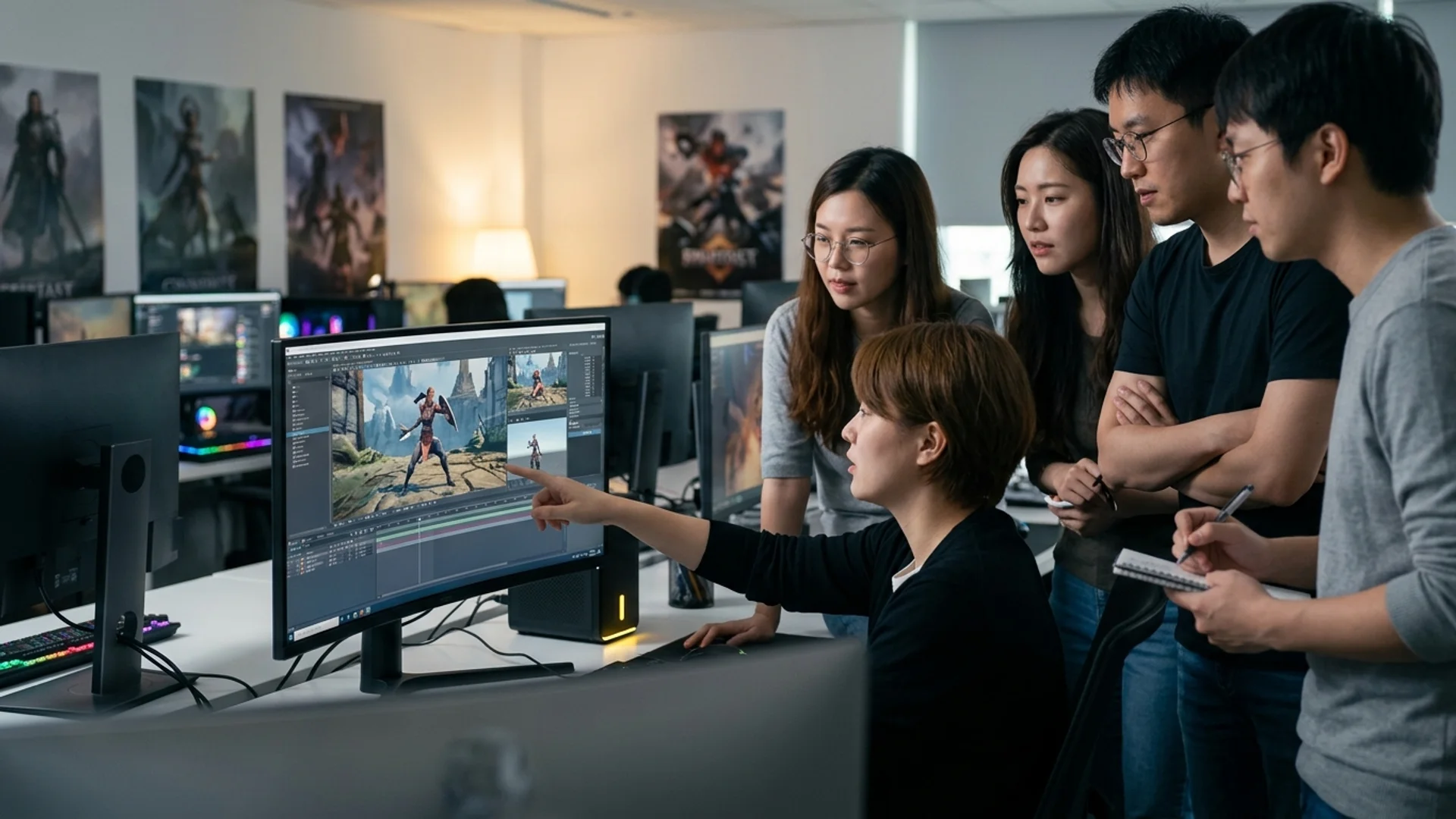
Examples from inside the company make that pragmatism concrete. A tool called Mockingbird generates facial animation from performance-capture data and has reportedly been used by Naughty Dog and San Diego Studio. Another system is an AI hair animation tool that turns real hair footage into strand-level 3D models. In addition, automation is expanding into repetitive workflows, software engineering efficiency, QA acceleration, and 3D modeling.
Sony’s message here is clear: AI will not replace artists, but it will reduce time and friction across different parts of the production chain. Even so, it makes sense that the debate is far from settled. The backlash around Larian Studios showed that AI use is still a sensitive topic in game development. Some studios restrict AI to areas like concept art, while others are looking for broader uses. Sony’s difference is that it is openly embracing this as a corporate strategy, not a workaround.
That leads directly to the bigger issue behind AI in game development, photorealism, and the artists’ test: is AI here to reduce production costs, or to open a new layer in the creative process? Sony’s current answer seems to aim for both. But that duality is also where the industry’s most heated debate lives.
Sony’s real message: the game schedule and AI are part of the same strategy
The signals Sony is sending through these three topics actually point to one strategy. Keeping the content pipeline alive with unexpected announcements like BeastLink, emphasizing player engagement in projects like Saros, and building an optimistic timeline story for unannounced games, all of it shows the company wants to manage the PlayStation ecosystem with a more controlled publishing model.
The AI side is not a separate corner of that picture. It is the production layer Sony is using to carry its content schedule. The company says it still puts creative labor at the center, while also rolling out workflow-accelerating tools across its first-party studios. That may look contradictory, but it actually reflects the core of modern game development: more content has to be produced in less time under heavier cost pressure.
It is not easy to draw a direct line between Saros’ commercial launch and BeastLink’s first impression, but together they reveal the balance Sony is trying to maintain. On one side is more accessible design and better player retention. On the other is a fresh idea that creates curiosity, draws reactions even at the trailer stage, and still leaves questions unanswered. Sony is moving along that tension line.
In short, the message is this: players should not expect a shortage of games on PlayStation in the coming years, but the question of how those games are made will only get sharper. For Sony, AI is no longer a debate sitting on the sidelines, it is now embedded in the content strategy itself. Read together, BeastLink, Saros, and the company’s unannounced game schedule suggest that PlayStation is trying to redefine not just the number of games it ships, but the production model behind them.
Sources
- https://www.playstationlifestyle.net/2026/05/06/gta-trilogy-dev-ps5-action-game-beastlink/
- https://wccftech.com/sony-ai-game-development-strategy-larian-backlash/
- https://www.pcgamer.com/software/ai/sony-interactive-entertainment-chief-says-ai-will-enable-gaming-experiences-like-never-before-and-i-wonder-how-long-are-these-guys-going-to-talk-about-it-before-we-actually-start-seeing-it/
- https://www.videogameschronicle.com/news/playstation-exec-says-next-few-years-of-unannounced-games-is-unbelievably-positive-there-are-no-dire-times-ahead-for-the-industry/
- https://www.eurogamer.net/saros-ps5-sales-launch-returnal