What Is AI Pressure Changing in the Game Industry?
AI is no longer just a production tool in gaming; it is becoming a force that shapes workflows, studio decisions, and creative control.
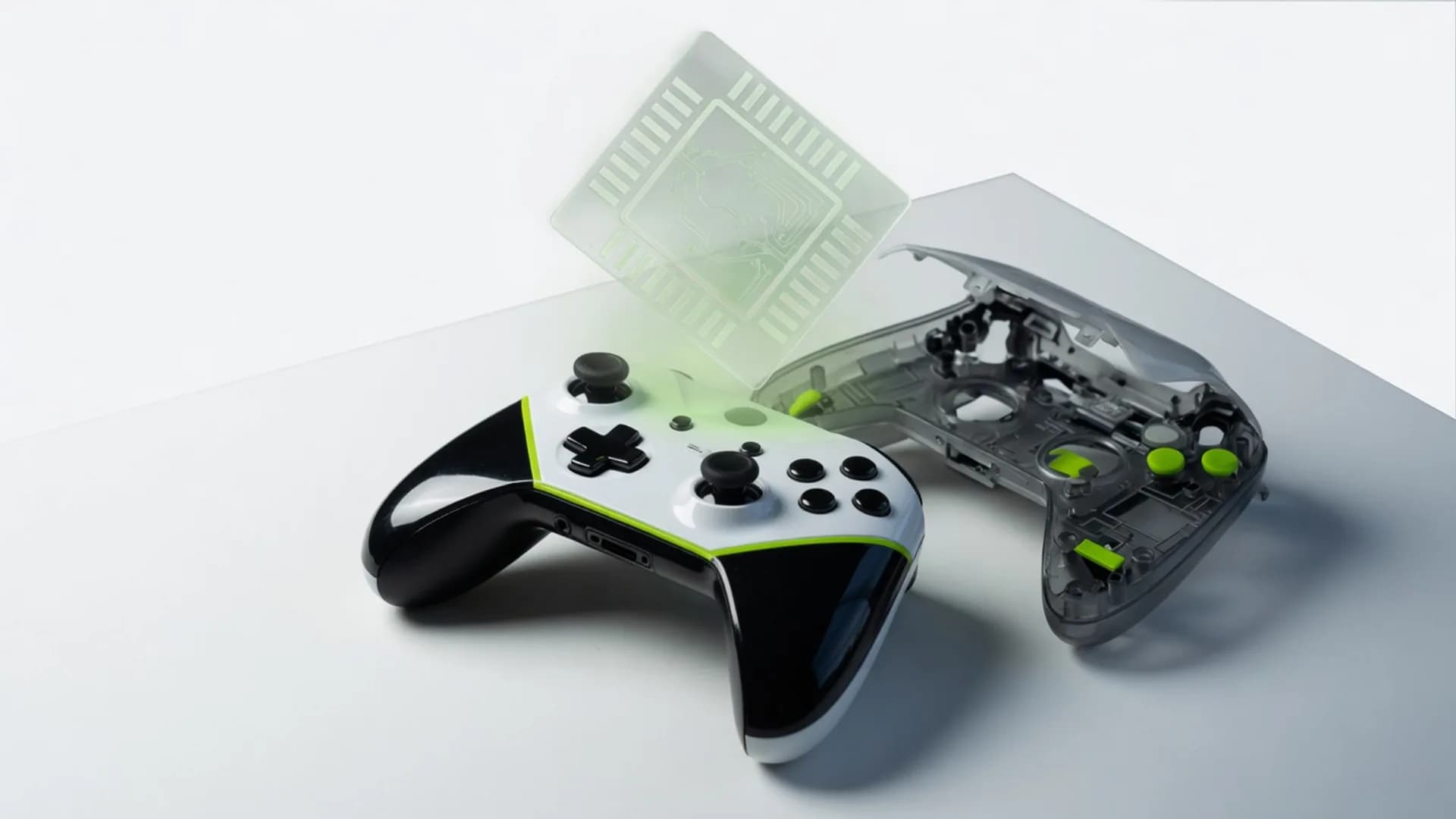
Recent statements from Nvidia, Intel, Amazon, and key names on the gaming side make one thing clear: AI is no longer just a production tool, but a force trying to shape the direction of the industry itself. For players, this may look like an abstract technology debate, but in reality it directly affects how games are made, who gets to make the decisions, and where creative control will remain. As the idea of the AI agent becomes more widespread in particular, the question is shifting from “Should AI be used?” to “How much of it should be allowed?”
The impact of this debate on the gaming world has been sharp. On one side are companies pushing for more automation; on the other, names questioning how this will change studio decisions and labor structures. Jennifer Hale’s criticism of studios sums up that tension directly: using AI is not a necessity, it is a choice. At the same time, the picture Nvidia and Intel are putting on stage shows that this choice is increasingly becoming a much broader infrastructure pressure.
Nvidia’s Vera Move: What Is the AI Agent Era?
The package Nvidia announced at GTC Taipei shows that the company is not just looking to offer faster chips for AI, but to control the entire computing stack. The company’s focus spans a structure that reaches from data centers to Windows PCs and humanoid robots. The core idea here is that AI agents are not just systems that chat; they are becoming software that writes code, uses tools, executes tasks, and manages workflows.
At the center of this approach is the Vera CPU. Nvidia positions it as the first CPU specifically designed for AI agents. This chip is built for Python runtimes, isolated code execution, orchestration logic, and CPU-heavy parts of data processing. Nvidia says Vera completes tasks 1.8 times faster than x86 CPUs across various workloads. The key point here is this: in AI systems, speed does not come from the GPU alone. When an agent fulfills a request, it searches, calls tools, runs code, and combines the results. The slowest part of that chain is often the CPU.
Nvidia’s larger Vera Rubin platform is built on the same logic. This system combines Vera CPUs, Rubin GPUs, BlueField-4 infrastructure processors, storage, and Spectrum networking into a single rack-scale design. In the company’s narrative, this is built for “AI factories.” In other words, AI is no longer viewed as a single model or a single application, but as a production line that runs continuously, makes decisions, and carries out tasks.
For the gaming industry, the meaning is clear: if the AI agent model reaches PCs and developer workflows, many steps from content production to testing become more open to automation. But that also raises the question of who holds decision-making power. Does AI remain just a tool, or does it become the layer that shapes the production logic from start to finish?
Amazon’s Studio Decision: Why Did the Game Idea Change for AI?
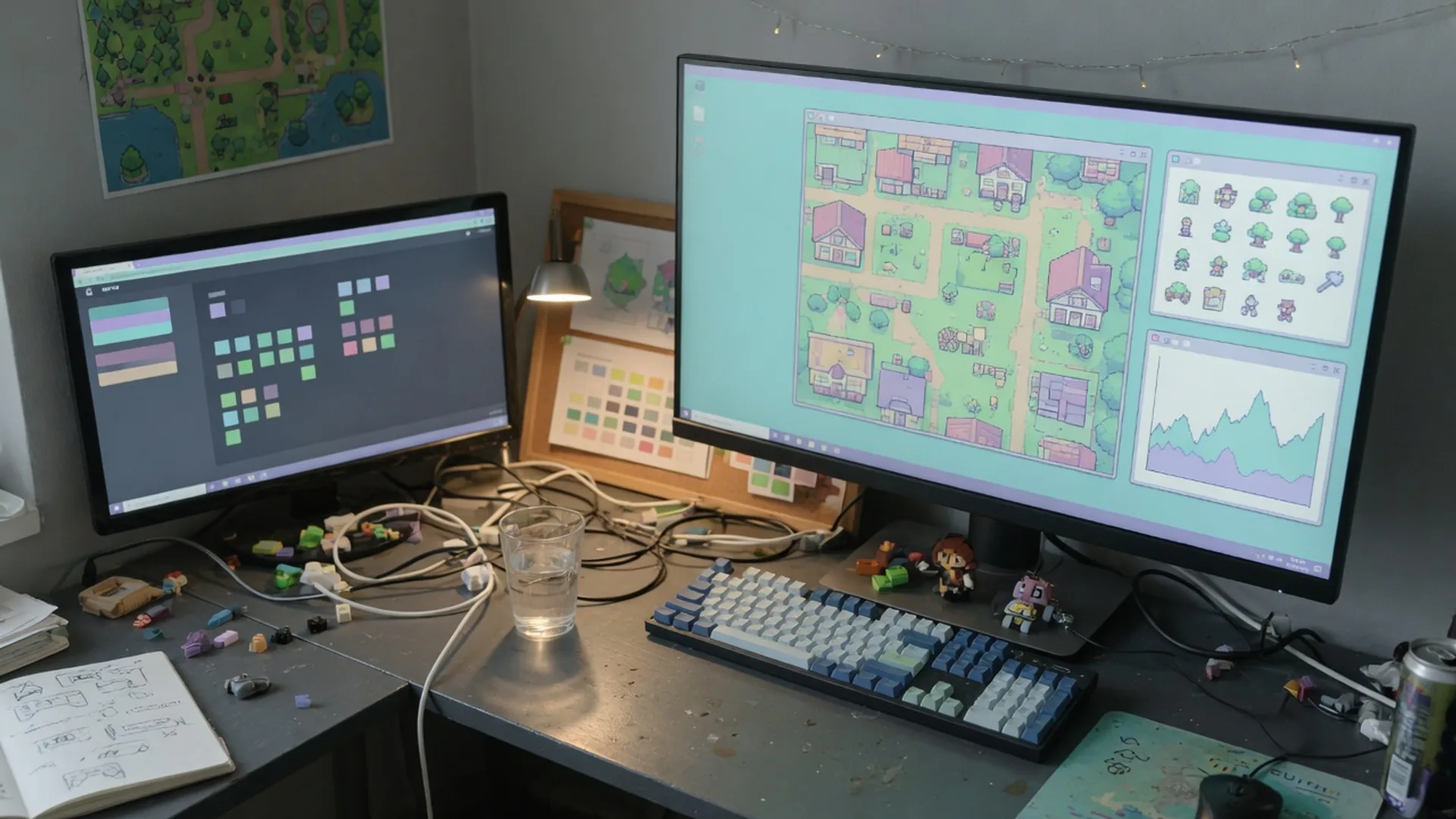
What happened on the Amazon side is a sharper example of how AI pressure is reflected in studio decisions. It is said that one studio within the company moved away from a game everyone was excited about and toward a project with more AI added to it, followed once again by mass layoffs. The most striking point here is that AI does not automatically guarantee quality or sustainability. On the contrary, for some teams, a change in project direction can damage both creative motivation and job security.
This picture shows that in game production, AI does not create a simple balance between “more efficiency” and “fewer people.” Even if a project includes more automation, that does not mean the team will be protected or that the product will be better. The Amazon example reveals that AI-driven transformations can sometimes drift away from creative goals. In particular, shifting a studio from an interesting game to something AI-heavy creates the impression that the priority is not the product but the technology showcase.
At this point, players’ reactions are understandable. Because for players, the AI debate is not only about whether graphics will be produced faster. It is also about why games are starting to feel more similar, how much say writers and artists have, and whether studios are choosing short-term tech presentations over risk. This is exactly where the approach that asks how far AI can go in game development becomes meaningful: technology can help, but once it fully takes over the creative core, what emerges is often not a game, but a process demo.
How Far Can AI Go in Game Development?
Intel’s Answer: How Will Local AI, PCs, and Robots Affect Players?
Intel’s move at Computex 2026 offers a different path in response to Nvidia’s AI dominance. The company argues that AI computing should happen locally, inside the device, not in the cloud. The Core Ultra 3 series, the 18A manufacturing process, and the “Perplexity Computer” shown in partnership with Perplexity are all part of this strategy. In Intel’s example, especially sensitive financial data can be processed entirely locally; in other words, the information is not sent to the cloud.
This approach is also important for gaming. Because local AI makes helper systems on the player’s device possible. Tools that do not depend on an internet connection could appear for installation, file management, performance tuning, or in-game support. That can provide speed and privacy benefits for users. But it also creates stronger hardware requirements on the NPU (neural processing unit) and CPU side. Intel’s main message is exactly this: the future of AI will not be built only in giant data centers, but on the desktop and in local systems.
What Intel said on the robotics side also matters for the ecosystem around games. The OpenVINO Physical AI toolkit aims to reduce the need for manufacturers to build driver, sensor, and control systems from scratch. In addition, the company says the Core Ultra X7 358H processor runs a robotics AI model 50 percent faster than Nvidia’s Jetson AGX Orin and only 10 percent slower than Jetson Thor T5000, while doing so at half the cost. Comparisons like these show that the AI race is no longer just about raw performance, but also price and local use.
What this means for gaming is this: AI is no longer just an invisible back-end tool used by developers. It is becoming a system design that will run on the player’s PC, in the studio’s production pipeline, and even on surrounding devices. So the question is no longer “Will AI be used?” but “At which layer, and with what limits?”
Jennifer Hale’s Warning: Who Is Responsible for the AI Decision?
Jennifer Hale’s statement clarifies the ethical side of this technical race. The actor, known for Mass Effect and Metal Gear, called on studios to take responsibility for their use of AI. Her point is simple but sharp: no one is forcing you to do this. That sentence points to the most critical issue in the industry. If AI is a tool, then how you use it is your decision. Therefore, the responsibility for the results is also yours.
Hale’s approach directly pushes back against the often-heard “technology is inevitable” narrative in production processes. Because AI use, especially in areas like voice acting, writing, animation, and content design, creates not only a speed debate but also one about labor and representation. While industry leaders defend AI for efficiency, the creative labor side worries that it will turn into uncontrolled use. That is why Hale’s words are not just an objection; they are a reminder of the boundary being drawn for studios.
At this point, players’ ethical sensitivity also becomes important. Using AI in a game’s production is not inherently a problem; the problem is how, where, and under whose control it is used. If AI only lightens repetitive work, that paints a different picture. But if it becomes the main factor determining creative decisions, human labor, and project direction, then the discussion shifts from technology to ethics and labor.
The Game Industry’s Search for Direction: Automation or Creative Control?
Looking at the current picture, the industry seems to be being pulled in two directions at once. Nvidia and Intel are racing to place AI agents everywhere. The Amazon example shows companies trying to turn projects into AI-centered efforts. Jennifer Hale, meanwhile, reminds us of the human side of the process: those who make the decisions must also be responsible for the outcome.
For game development, this trio of pressures matters a lot. On one side there are faster production and smarter tools. On the other are workers’ roles, the integrity of art, and players’ trust. Automation does not always reduce errors; sometimes it blurs the decision-making layer. Creative control is not just about “what is produced,” but “why and how it is produced.”
That is why AI pressure in the game industry is not just a technology story. It is also a story about power, labor, and responsibility. If studios use AI only as a showcase feature, trust on the player side will erode further. If it remains a tool, it can make production easier. The real boundary will be drawn here: will AI stay in service of the game, or will it become the owner of the game?
Sources
- https://www.ynetnews.com/tech-and-digital/article/rjyjgj5efe
- https://www.pcgamer.com/gaming-industry/amazon-reportedly-had-a-studio-pivot-away-from-a-game-everyone-was-excited-by-to-make-something-with-more-ai-stuffed-in-it-then-laid-them-all-off-anyway/
- https://www.pcgamer.com/software/ai/tell-me-thats-not-r2d2-tell-me-thats-not-robotics-jensen-huang-thinks-the-future-of-personal-computing-is-letting-ai-agents-run-your-pc/
- https://www.ynetnews.com/tech-and-digital/article/ryluuonxml
- https://www.pcgamer.com/gaming-industry/mass-effect-and-metal-gear-actor-jennifer-hale-calls-on-studios-to-take-responsibility-for-their-ai-use-aint-nobody-making-you-do-it/