Making Money in Games: Pearl Abyss’s Rise, PlayStation’s Bill, and the Space Entrepreneurs Are Creating
Pearl Abyss’s Crimson Desert windfall, Sony’s Bungie write-down, and Dessn’s production-focused funding round reveal the money side of the games business.
Making Money in Games: Pearl Abyss’s Rise, PlayStation’s Bill, and the Space Entrepreneurs Are Creating
The games industry may look like a growth story from the outside. But it can be hit by both a revenue surge and intense cost pressure at the same time. That’s why three recent examples have made the money side of the business especially clear: Pearl Abyss’s breakout with Crimson Desert, PlayStation’s heavy write-down tied to its Bungie investment, and Dessn’s new funding round for its production-focused tool idea.
The Crimson Desert effect at Pearl Abyss: a $220.6 million quarter
The picture for Pearl Abyss points to a sharp turnaround. The South Korean studio’s operating revenue for Q1 2026 rose 419.8% year over year to $220.6 million, boosted by the March 19 launch of Crimson Desert. Operating profit climbed to $142.5 million, while net profit reached $114.2 million.
The key point here is that the success is not simply a “the game sold well” story. According to the company’s figures, Crimson Desert generated $179.1 million in sales, and more than 80% of that came from North America and Europe. The balance between console and PC revenue is also notable: PC accounted for 59%, console for 38%, and mobile for 3%.
Another detail that makes Pearl Abyss’s quarter more interesting is the company’s broader plan. The studio says it aims to release new games every two to three years. DokeV is in pre-production, while Plan 8 is in the concept stage. In other words, the revenue jump from Crimson Desert is working less like a one-off spike and more like a lever financing the studio’s production cadence.
This is where the meaning of “growth” in the industry becomes clearer: a strong launch, regional sales distribution, platform balance, and cash flow that can support new projects. So it’s not just about popularity, but also about sustainable production capacity.
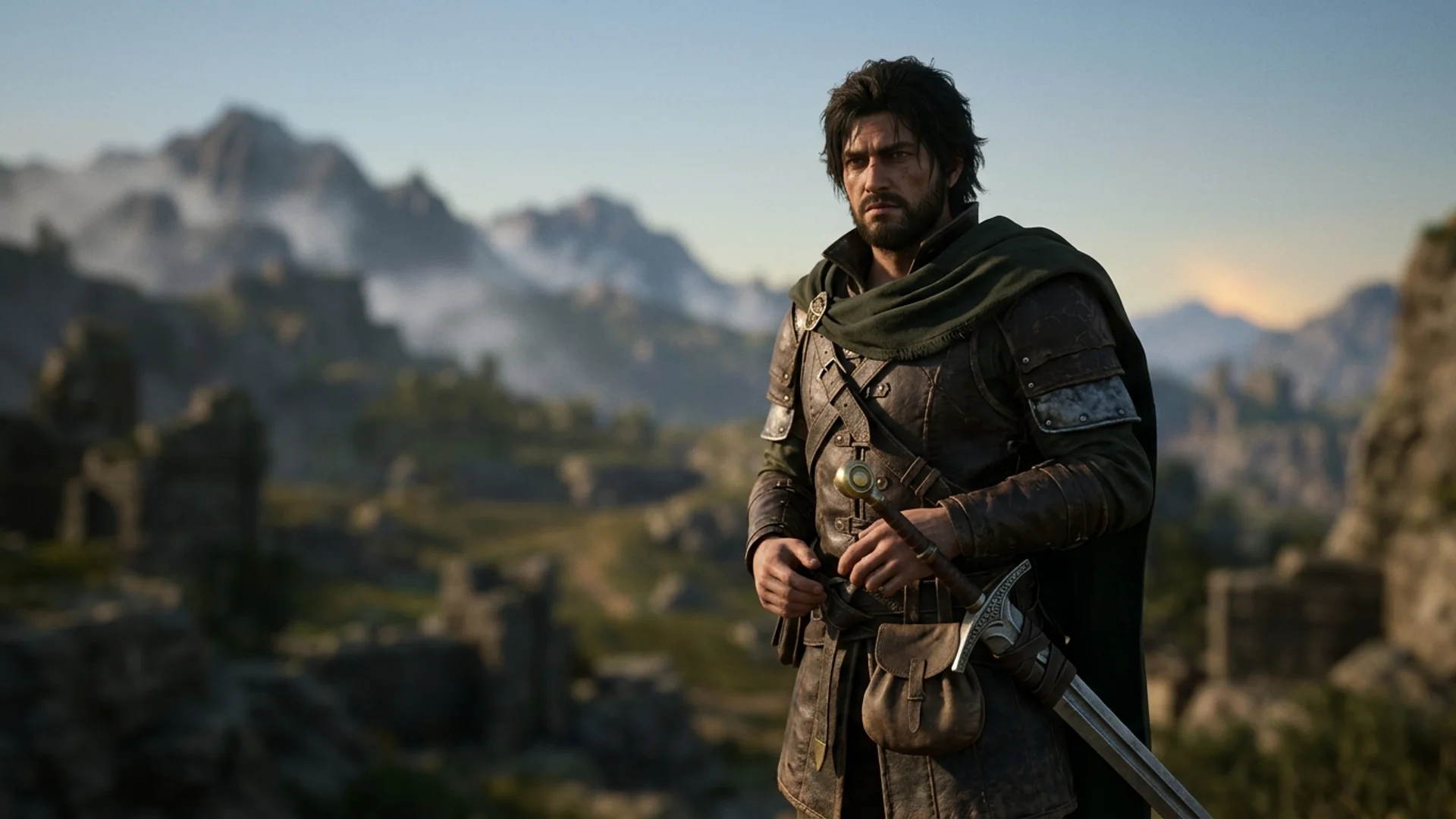
Crimson Desert's sprawling open world reflects the production strength behind Pearl Abyss's record revenue.
PlayStation and Bungie: the $765 million blow behind the success story
Another data point from the same week showed the other side of the business. Sony’s Games & Network Services segment looked more stable on a yearly basis overall, but quarterly operating profit fell 41.6%. Behind that drop was a $765 million impairment charge linked to Bungie.
The company had previously disclosed a $204.2 million impairment due to Destiny 2’s weak performance. This time, an additional $565 million impairment was recorded in Q4. The reason: Bungie’s game portfolio did not meet expectations.
What matters here is that Sony’s overall games business is not doing badly across the board. On the contrary, annual net sales rose to $79.7 billion, and operating profit reached $8.9 billion. Games & Network Services also posted annual operating profit of $2.9 billion. But the accounting impact of a major acquisition can suddenly carve into an otherwise strong-looking picture.
PS5 sales are also part of that pressure. Annual unit sales fell to 16 million, down from 18.5 million the previous year. In Q4, Sony sold 1.5 million consoles. Even so, total PS5 sales have now surpassed 93 million, showing that Sony is still supported by a business with expanding software and network services.
As for Marathon, the company says player reaction has been strong and engagement metrics remain high. The plan is clear: more content, gameplay improvements, and user-base growth. But financially, the issue is this: even if a game project looks good internally, if the return on investment falls short of expectations, the balance sheet records it immediately. That makes the PlayStation-Bungie line a strong example of how fragile valuation can be in the games industry.
In this context, the approach discussed in Major Brands Shift Course with New Studio Moves is also examining the same business logic: studios are not only making games, they are also managing capital allocation and risk.
Dessn’s $6 million round: not a game, but part of the same economy
When talking about how game companies make money, it’s also worth paying attention to startups investing in production tools. Dessn’s new $6 million funding round connects to the same economy from a different angle.
The company’s product is not a game directly; it’s a production-focused design tool. Dessn says it helps teams work more easily with codebases and speeds up the transition between designers and developers. According to the founders, the tool is most relevant for teams that already have an existing codebase. Rather than being a tool for generating ideas from scratch, it focuses on improving and shipping an active project.
The business model is also notable for its balance. Users can try a repository for free, get five prompts per week, and then move to plans starting at $39 per user per month. The team is also considering integrations like Slack, while specifically saying it does not want a Figma integration. The reason is straightforward: they don’t want to pull users away from production.
This example is a reminder that growth in games and creative software is no longer just about producing more content. Tools that speed up pipelines, smooth the handoff between teams, and reduce costs are part of the same market.
Profitability comes down to the same question: how much growth, how much cost?
Put side by side, the Pearl Abyss, PlayStation/Bungie, and Dessn examples lead to one conclusion: the games business can still generate huge money, but capital burn can grow just as fast. Pearl Abyss lifts its quarter on the back of a single game, Sony books the cost of a major acquisition, and Dessn is trying to create room in the equation with tools that make production cheaper.
The same logic applies to startups like Jordan Lazarus’s Xen Gaming. Bringing 35 content creators, brand deals, legal support, and production under one roof means managing growth not just through follower count, but through revenue flow. It shows that “success” in games now means operational discipline, not popularity alone.
In short, the financial side of the industry has both winners and warning signs. On one side is the revenue momentum created by Crimson Desert; on the other, the massive accounting bill tied to Bungie. In between, a new generation of startups is looking for gaps that can make production more efficient. That is where the real story of the games economy is being written.