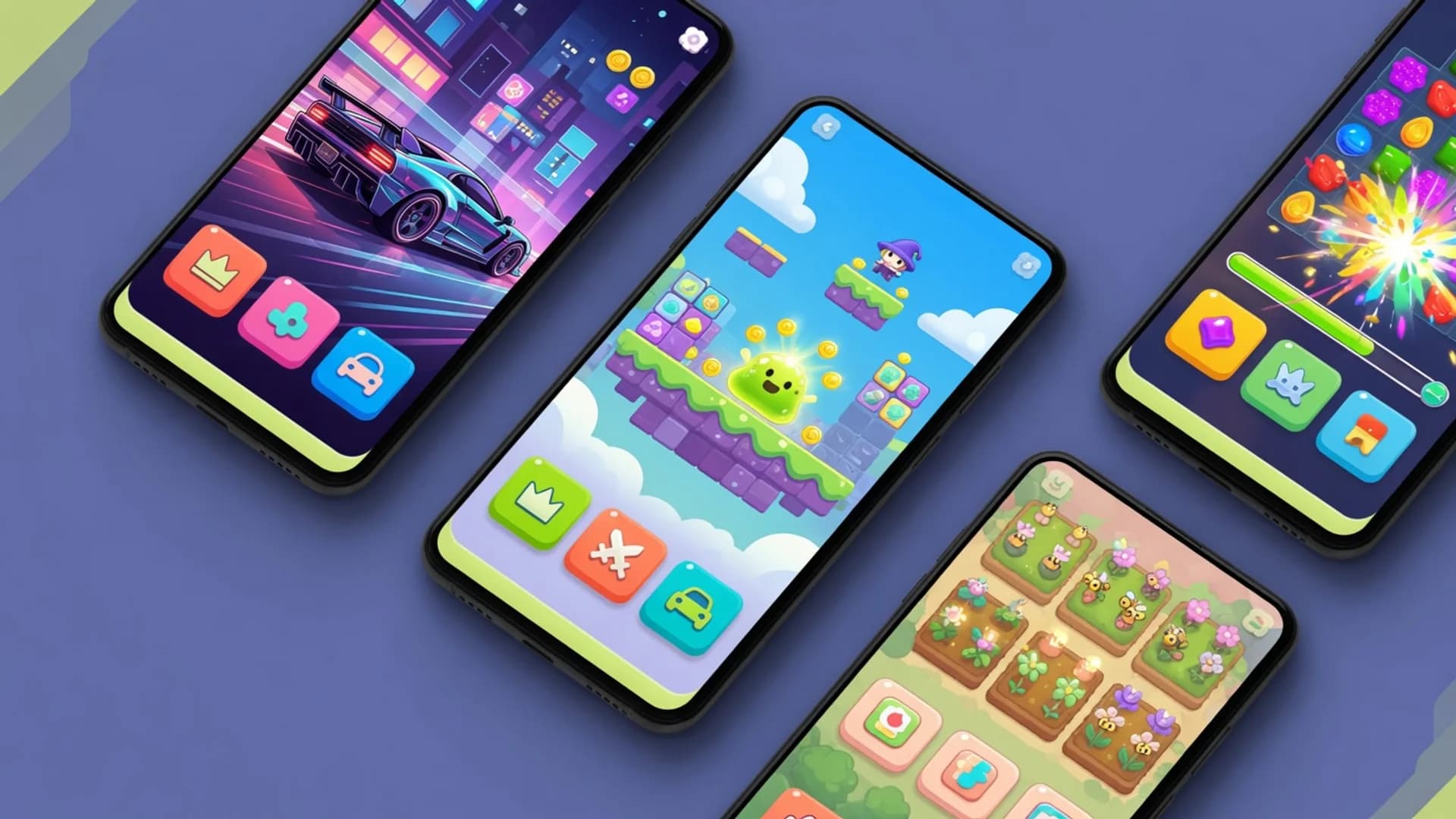
Mobile Games Are No Longer a Side Channel, They Are the Growth Itself
Mobile gaming is no longer a “fill the spare time” format. It has become a mainstream growth engine for Europe’s economy, brand engagement, and new studio investment.
Mobile Games Are No Longer a Side Channel, They Are the Growth Itself
For a long time, we read mobile games as a format that simply “fills spare time.” But the picture that has emerged is much harsher: mobile has become a mainstream growth engine—not just in the European economy, but in brand engagement and new studio investments as well. On one side there’s King’s newly published report, on the other Jollibee’s in-app game strategy and CD Projekt Red’s mobile project with Scopely. They all say the same thing: the phone screen is no longer a secondary space.
The strongest part of this shift is that mobile is not just accessible; it creates habits. Short sessions, easy return, a low barrier to entry, and a device that is always within reach place mobile games into the flow of daily life. Console may still be the home of big-budget production, but mobile makes contact far more frequently. That’s where the real difference begins.
€6 Billion to the European Economy in 2025: King’s Picture
King’s published report says mobile games are not merely an “emerging area” for Europe, but a direct strategic growth driver. According to the report, mobile game companies in Europe added around 5.89 billion euros to the economy in 2025. In the same period, they supported more than 63,000 jobs and generated 7.53 billion euros in revenue from global audiences. The report says more than 1,000 European mobile game studios contributed to this picture.
The important point here is that mobile games are now being taken seriously not only on the consumption side, but on the production side as well. According to the framework shared by Todd Green, mobile is currently the most popular way people access games. Reaching more than 300 million players in Europe also supports this. So the issue is not just that mobile games are “downloaded a lot”; employment, creative production, digital skills, and the ability to attract investment are all part of the equation.
Another striking detail in the report is the projection that mobile revenue will rise above 8 billion euros by 2028. A projection like this shows that mobile is not a passing trend; it has become a permanent economic layer. The old “small screen” description for mobile games no longer makes the scale seem smaller. On the contrary, it describes the power of distribution and access.
Mobile games are no longer a short stopgap entertainment on the go, but a usage pattern embedded in daily routine.
Jollibee Joy Run: Game Mechanics Aren’t Just for Games Anymore
Reading the growth story of mobile games only through game companies would be incomplete. Jollibee is a good example of that. The problem encountered during the new app transition was that traditional promotions were no longer enough to retain users. Raffles, one-off incentives, and passive campaigns are no longer sufficient to hold the new generation of users. That’s why Jollibee turned the app into a play space with “Jollibee Joy Run.”
The structure here is very clear: users progress in the game, collect points, and those points are directly converted into delivery discounts. In gameplay driven by Super Joy and Captain Jolly, the goal is not just to have fun; it is to turn earned progress into real benefit. Rewards such as Chickenjoy, Yumburger, Jolly Spaghetti, and Jolly Crispy Fries become parts of the experience that connect the brand to everyday life.
This is one of the most concrete examples of why mobile games are powerful. Because the issue is not graphics quality or a massive open world. The real issue is producing repeat behavior. Jollibee created a reason for users to return to the app. The game is not the end product here; it is a tool for building loyalty.
Also, the fact that Joy Run ran between August 11 and November 6, 2025 shows just how well mobile games can work with campaign logic. It is a format that can start as a short-term promotion and turn into a daily usage habit. That explains why mobile is so attractive on the brand side.
CD Projekt Red and Scopely: Mobile Is Now in Big IP Plans
Another sign that mobile has entered the mainstream is how major brands are approaching it. CD Projekt Red is working on a mobile game with Scopely. The official tone around the project is clear: it is not launching this year, and it is not “the story” for 2026 either. So development is ongoing, but there is no rushed release target. That alone is significant, because major IPs are no longer seen as quick trial-and-error tools in mobile. They are becoming part of long-term plans.
Scopely’s presence is no coincidence either. We’re talking about a company that achieved huge-scale success with Monopoly Go and now also owns Pokémon Go. Savvy Games’ acquisition of Scopely for $4.9 billion in 2023 also shows the capital concentration in mobile. Here, mobile is not only about player habits; it is also a market that influences mergers and acquisitions.
CD Projekt’s previous mobile experiences complete the picture. Gwent: The Witcher Card Game had mobile ports, and support ended in 2023. The Witcher: Monster Slayer launched in July 2021 and shut down about two years later. In other words, success on mobile is not automatic. Simply carrying a big IP is not enough; consistency and the right design are required. But the fact that companies are still investing in this area shows they do not underestimate mobile’s strategic importance. If you want, this can also be aligned with the line of “Familiar IPs Return Through New Genres: Karma Exorcist, Rogue Core, Exodus, and Dungeon Clawler” — IPs are being tested again in new formats.
Mobile’s Strength: Short Sessions, Solid Onboarding, Instant Return
The reason mobile games remain one of the most-played formats is not mysterious. The phone is already with you. There is no extra installation step just to open the app. It can deliver a sense of progress in short sessions. Games that do this well bring the player into the action on the first minute without exhausting them with long tutorials.
The Alto’s Odyssey example discussed on Android Authority is meaningful for this reason. Even if a player says they don’t like mobile games, they still keep this one on their phone for years. The reason is simple: one-touch mechanics, quick start, zen visuals, and a structure that does not pressure the player. The game can be opened and closed whenever needed. That is perhaps mobile’s biggest advantage: fitting into the player’s life.
The same logic explains why Wordle, Pips, and the daily puzzle ecosystem still matter. Daily repetition works more naturally on mobile or in lightweight formats. Because users return to the game not as a “session,” but as a habit.
From Somalia to Europe: The Same Point — Access, Community, and Habit
Somalia’s digital gaming culture confirms this from another angle. There, game growth does not come through expensive consoles or massive esports arenas; it moves forward through smartphones, affordable mobile internet, and games that everyone can access. Together with football themes, chat groups, and social platforms, mobile games become more of a community language than just a form of entertainment.
This example matters because mobile’s strength emerges not only in large markets, but also in places where access is limited. When the entry point is low, gaming culture spreads to a wider audience. It does not matter whether it’s Turkey, Europe, or Somalia: if people are entering games through the device in their pocket, the format’s advantage is obvious.
Mobile games create not only a single-player screen experience, but also a shared habit people talk about with friends.
What mobile has become today is exactly this: a format that creates economic value, gives brands daily touchpoints, brings major IPs into strategic plans, and captures user habits with minimal friction. It is not necessary to say it has replaced console. But it is now hard to say it is secondary.
The real question is this: if mobile games are driving growth this clearly, how well will studios and brands use that power?