Why Are Games Suddenly More Visible on the App Store and Google Play?
Apple’s 2026 Apple Design Awards and Google Play Store v51.7 are making mobile games more visible, more credible, and easier to access right inside the store.
Apple announced the winners of the 2026 Apple Design Awards, spotlighting 12 apps and games, while Google Play Store v51.7 made purchase, download, campaign, and pre-registration flows more prominent. One strengthens perceptions of quality through awards, the other boosts visibility and ease of access. In the end, the success of a mobile game now depends not just on a strong build, but also on how well it is presented inside the store.
Which Games Did Apple Highlight with the 2026 Apple Design Awards?
This year’s Apple awards show that games are judged not only as entertainment, but also for design and technical craftsmanship. One app and one game were selected across six categories, with winners chosen from 36 global finalists. On the games side, the standout names represent very different kinds of experiences.
In the Delight and Fun category, Is This Seat Taken? took the win. Developed by Poti Poti Studio, the game offers a cartoon-style puzzle experience centered on figuring out seating arrangements in public transit. It takes a playful concept and builds a simple but memorable gameplay loop around it. Finalists in the same category included BALL x PIT, PowerWash Simulator, Blippo+, and Metaballs.
In the Inclusivity category, Pine Hearts stood out. Developed by Hyper Luminal Games Limited, the game unfolds in a warm world where good deeds are rewarded, and it draws attention for its accessibility settings. Advanced text readability, customizable controls, and adjustable motion and sensory feedback help the game reach a wider audience. Sid Meier’s Civilization VII was also among the finalists in this category.
In the Innovation category, Blue Prince won. Created by Dogubomb, the game is described as a distinctive chapter-based adventure that blends exploration, puzzle-solving, and non-combat elements. The game strengthens its environmental storytelling with photographs on the walls and handwritten notes. Other finalists included D-Day: The Camera Soldier, Detail: AI Video Editor, Pickle Pro, and TR-49.
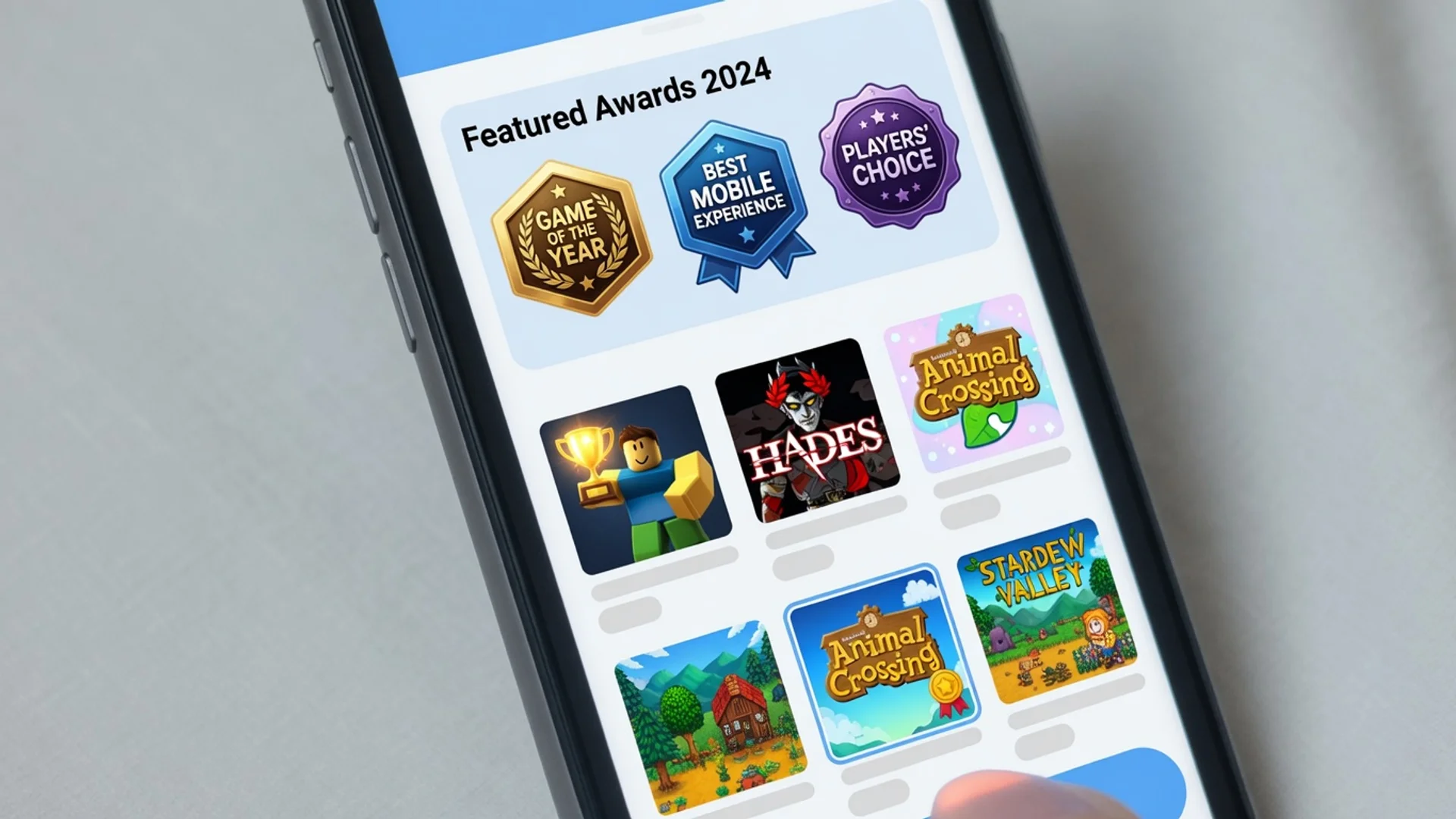
Apple’s language matters here. The award does not merely label something a “good game”; it starts building quality perception on the store page itself. Before users even download a game, they are told it has been selected, approved, and distinguished. That shows the App Store storefront works as a layer that builds trust before content discovery. Especially for titles like Is This Seat Taken? and Pine Hearts, the impact is similar even though they belong to different genres: a short description, a clear idea, and a memorable presentation.
What Does Google Play Store v51.7 Change?
On Google’s side, the focus is more direct: make the store easier to navigate, help users avoid missing deals, and simplify the pre-registration process. Google Play Store v51.7 redesigns the purchase and download dialogs. But the real difference is that discounts and campaigns are now much more visible.
In the new version, sale prices, discount details, and when an offer ends are shown directly on the listing page. This makes app campaigns that once felt hidden or scattered much easier to understand. Users can now see more clearly whether a game is on sale, how much the price has dropped, and when the offer expires.
Google also combined automatic installation and pre-registration into a single flow. That shortens the path from hearing about a game to having it ready on the home screen on launch day. On mobile, the route from discovery to download is already short; now it has become even shorter and requires fewer taps. From that perspective, Google Play supports game visibility not only through the storefront, but through the transaction flow as well.
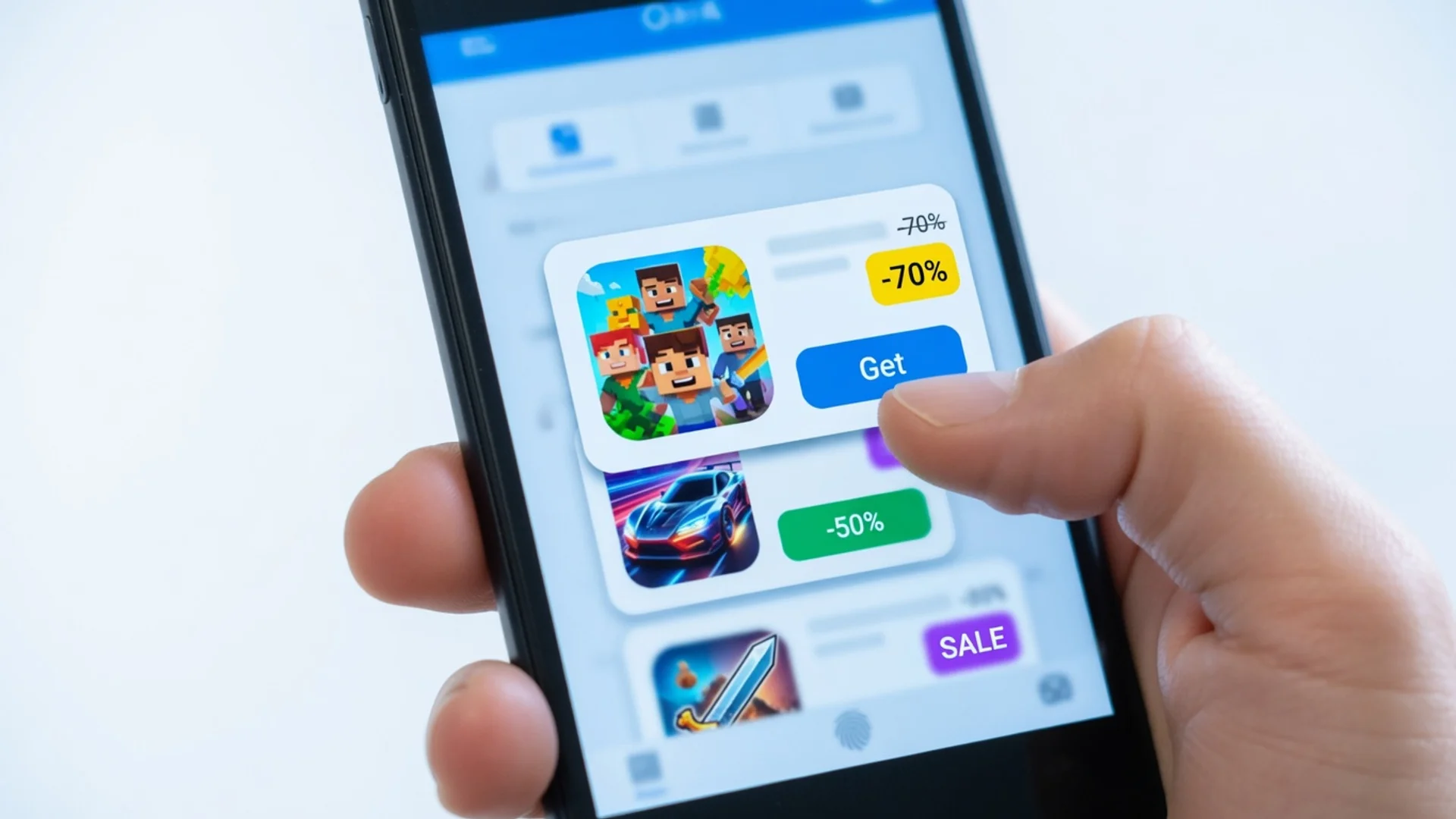
Another notable area is game-focused notifications. The update introduces pop-up banners explaining monthly gaming challenges and Loyalty MAX offers. It also becomes possible to view certain content on the listing pages of installed apps and switch to similar categories within Play Collections. This turns the store from a simple download hub into a more continuous discovery surface. For related reading, the piece titled Mobile Games Are No Longer a Side Channel, They Are the Growth Itself also approaches this shift from a different angle.
What matters here is that Google builds the perception of a “good game” not directly through awards, but through visibility and ease of use. In other words, standing out in the store is no longer just about a game’s quality; the campaign, pre-registration, and installation path also need to work cleanly. As a result, the most-downloaded mobile games often rise quickly not by chance, but because they are presented well in the storefront.
How Do Award and Storefront Effects Shape the Fate of Mobile Games?
Although Apple and Google take different approaches, the result converges on the same point: in-store placement directly affects how a game is perceived. Apple gives the games it selects an identity of being “exceptional in design.” Google lowers attention barriers by making it easier for users to reach the game. One signals quality, the other speeds up access.
This distinction is especially useful when explaining the success of mobile games. If a game wins an award in the store, users begin to see it as more curated and more trustworthy. If a game appears in the storefront with clear campaign information, users make decisions more quickly. Apple’s award language and Google Play’s storefront language use different tools, but both serve the same goal: bringing the user closer to the download decision.
Apple’s winner list shows this especially well. A unique puzzle like Is This Seat Taken?, a narrative-driven adventure like Blue Prince, and an accessibility-focused game like Pine Hearts do not get lost in the “new releases” category inside the store. They become more memorable because they have been selected. On Google Play, the logic works in the opposite direction: the game’s name reaches the user early, and the campaign and pre-registration details shorten the decision window.
That is why “visibility” in mobile gaming no longer means advertising alone. Sometimes an award badge, sometimes a store update, becomes the main factor determining a game’s fate. The store page is the player’s first touchpoint. If that first touchpoint is strong, the download comes more easily; if it is weak, even the best game can remain in the background.
Why Does Fast Growth in Mobile Gaming Now Start in the Store?
Looking at the current landscape, the engine behind fast growth comes down to three simple but effective mechanisms: visibility, trust, and frictionless access. Apple’s awards system raises trust. Google Play’s v51.7 update makes access easier. When the two work together, the download curve for mobile games can gain momentum much faster.
Changes in the campaign and pre-registration space make the storefront battle for mobile games much more visible. When a user encounters a game now, they can see price information, offer duration, and registration status much more clearly. This visibility embeds the marketing message into the store’s own design. As a result, the information reaches the decision moment directly, without requiring extra effort to catch attention.
On the awards side, the perception of quality is strengthened. The 12 winners of the Apple Design Awards, chosen from among 36 finalists, create a sense of prestige inside the store. Good design, accessibility, and innovation help mobile games be perceived not as time-fillers, but as carefully crafted experiences.
That is why the games featured on the App Store and Google Play are not only more visible; they are also seen as higher quality, more trustworthy, and easier to access. The rapid rise of mobile games often starts right there: inside the store, on the first screen where the decision is made.